How to Choose an Energetics Manufacturer: 6 Things to Check
Most energetic components work once, with no chance to retry. Here are six things to check when comparing energetics suppliers, and the questions to ask before you place an order.
Key points
- Start with certifications: ITAR registration, ISO 9001, ISO 14001, CMMC Level 2 and an active CAGE code.
- Check how the supplier handles and stores energetic materials.
- The more processing, sealing and testing done in-house, the fewer handoffs between materials and finished device.
- Every lot should trace back to its materials, process records and test results.
Why does supplier choice matter more in energetics?
A cartridge, initiator or CAD/PAD device is judged by how consistently every unit in every lot performs. That depends on the supplier's process control far more than on a single sample.
The checks below help a buyer compare energetics suppliers on what matters: proof of control, not promises.
Supplier checklist at a glance
| Check | What to ask for | Why it matters |
|---|---|---|
| Certifications | Current ITAR, ISO 9001, ISO 14001 and CMMC Level 2 certificates, and a CAGE code | Confirms the supplier can do defense work securely and compliantly |
| Energetics handling | Explosives safety procedures and licensed storage | Protects people, product and schedule |
| In-house capability | Which processes and tests are done in-house | Fewer handoffs mean tighter process control |
| Traceability | How a lot traces back to its materials and test data | Lets you investigate and contain an issue quickly |
| Qualification support | First article testing, LAT and government-witness support | Avoids delays at qualification and acceptance |
| Records | The document list that ships with each lot | Prevents acceptance holdups |
1. Certifications and registrations
Start with the basics a defense supplier should hold:
- ITAR registration with the Directorate of Defense Trade Controls, required to manufacture defense articles.
- ISO 9001 for the quality management system, and ISO 14001 for environmental management.
- CMMC Level 2 for protecting controlled defense information.
- An active CAGE code so the supplier can be identified in government systems.
2. Energetics handling and safety
Energetic materials need trained people, licensed storage and documented procedures. Ask whether the supplier handles ammunition and explosives in line with DoDM 4145.26, the DoD Contractor's Safety Manual for Ammunition and Explosives, including storage, handling, transportation, SOP audits and licensed magazines.
3. In-house process and testing capability
The more critical steps a supplier controls in-house, the fewer handoffs between materials and finished device. Ask which of these they perform themselves:
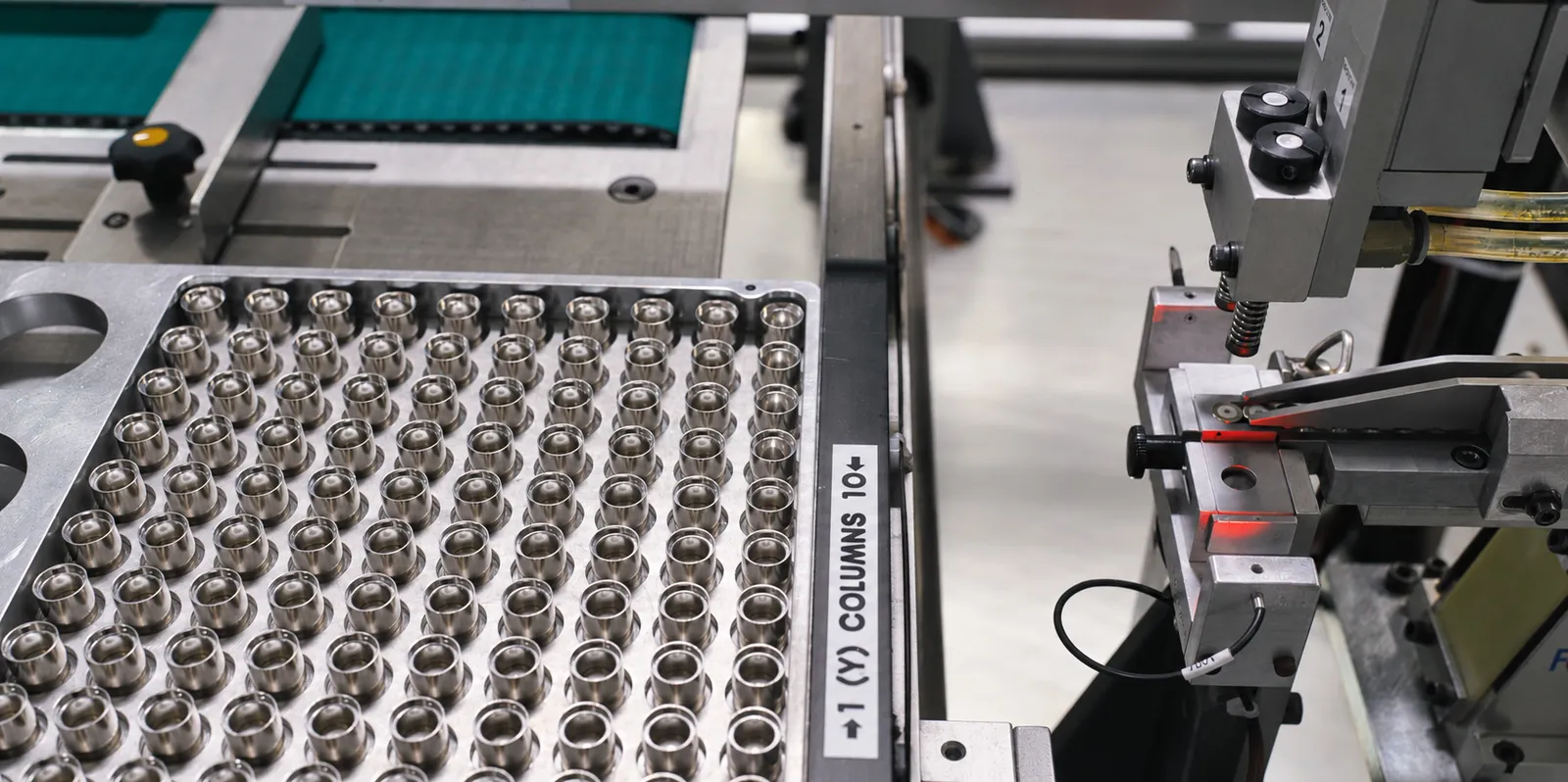
- Energetic materials processing, weighing, loading and pressing
- Bridgewire welding, glass-to-metal sealing and hermetic sealing
- Hydrostatic and helium leak testing, and electrical testing
- Pressure and velocity testing, and ESD and friction sensitivity testing
- Ballistic and environmental testing on indoor and outdoor ranges, to the program's specified standards, such as MIL-STD-331 or MIL-STD-810
4. Lot traceability and inspection
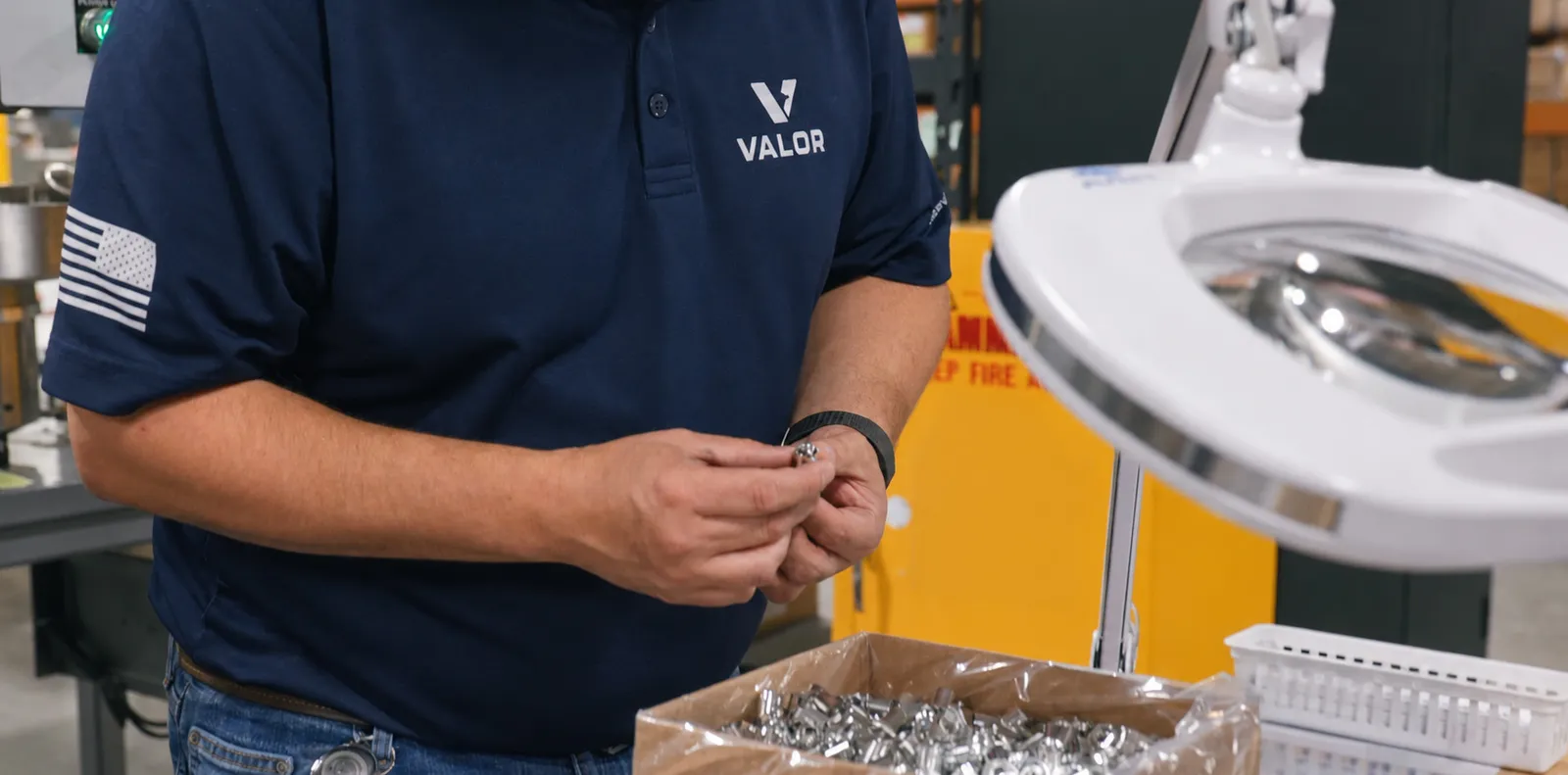
Every lot should trace back to its materials, process records and test results. Look for dimensional inspection with CMM and vision systems, AS9102 first article inspection, and nondestructive testing by NAS 410 and SNT-TC-1A certified personnel.
5. Qualification and acceptance support
New or changed devices usually need qualification, then lot acceptance testing (LAT) for production. Ask whether the supplier supports first article testing, government-witnessed LAT and DCMA quality assurance.
6. The records you receive
Agree up front on the documents that ship with each lot. Typical records include material certifications, dimensional results, lot traceability, test reports, and qualification or acceptance records required by the contract.
What questions should you ask a supplier?
- Which certifications do you hold, and can you share current certificates?
- Which processes and tests are done in-house, and which by qualified outside suppliers?
- How do you trace a finished lot back to its materials and test data?
- What qualification and LAT support can you provide?
- Which records ship with each lot?
How Valor Tactical measures up
Valor Tactical has manufactured energetic components in Grand Junction, Colorado, for more than 50 years. Valor is ITAR registered, ISO 9001 and ISO 14001 certified, CMMC Level 2, with CAGE code 04099. Processing, sealing, inspection and testing run under one quality system across more than 150,000 sq ft of facilities. See quality and testing and manufacturing capabilities.
Frequently asked questions
What is ITAR registration?
Registration with the U.S. State Department's Directorate of Defense Trade Controls. Companies that manufacture defense articles must register under the International Traffic in Arms Regulations.
What is CMMC Level 2?
A U.S. defense cybersecurity certification for companies that handle Controlled Unclassified Information. It shows the supplier protects controlled data to a defined standard.
What is lot acceptance testing (LAT)?
Testing samples from each production lot to confirm the lot meets its requirements before it is accepted.
What is first article inspection (FAI)?
A full check of the first production part against its drawing and requirements. AS9102 is the standard format for the FAI report.
What is a CAGE code?
A Commercial and Government Entity code: a unique ID for suppliers in U.S. government systems. Valor's CAGE code is 04099.
Have a requirement?
Send us a message and our team will follow up. Valor Tactical is ITAR registered, ISO 9001 and ISO 14001 certified, and CMMC Level 2.
Contact us