How Impulse Cartridges Work: Countermeasure and Stores-Ejection Cartridges
An impulse cartridge is a small, electrically initiated energetic device that produces a short burst of gas pressure. That pressure does one mechanical job: pushing a flare or chaff payload out of a dispenser, deploying a towed decoy, or ejecting a store from an aircraft. Here is how impulse cartridges work, where they are used, and how they are made and checked.
Key points
- An impulse cartridge converts an electrical firing signal into a brief, high-pressure gas output.
- Common uses include flare and chaff dispensing, towed decoy deployment and stores ejection.
- Designations such as CCU-136A/A, CCU-145/A, BBU-36/B, BBU-48A/B, Mk 107 and Mk 17 identify specific cartridges for specific equipment.
- Each lot is manufactured and accepted against the applicable requirements, with lot traceability.
What is an impulse cartridge?
An impulse cartridge is a type of cartridge-actuated device (CAD). It contains an initiator and an energetic charge sealed inside a metal body. When the aircraft's system sends an electrical signal, the cartridge fires and releases gas pressure for a fraction of a second.
The cartridge does not create the defensive or mechanical effect on its own. It supplies the energy; the dispenser, decoy or ejector mechanism does the work. See CAD/PAD explained for how cartridge-actuated devices fit into the wider family.
How does an impulse cartridge work?
- Signal. The aircraft's control system sends an electrical firing pulse to the cartridge.
- Initiation. A bridgewire inside the initiator heats and ignites the first energetic material.
- Pressure. The ignition lights the main charge, which burns and produces gas pressure in a closed space.
- Action. That pressure pushes a piston or payload, releasing the countermeasure or ejecting the store.
Where are impulse cartridges used?
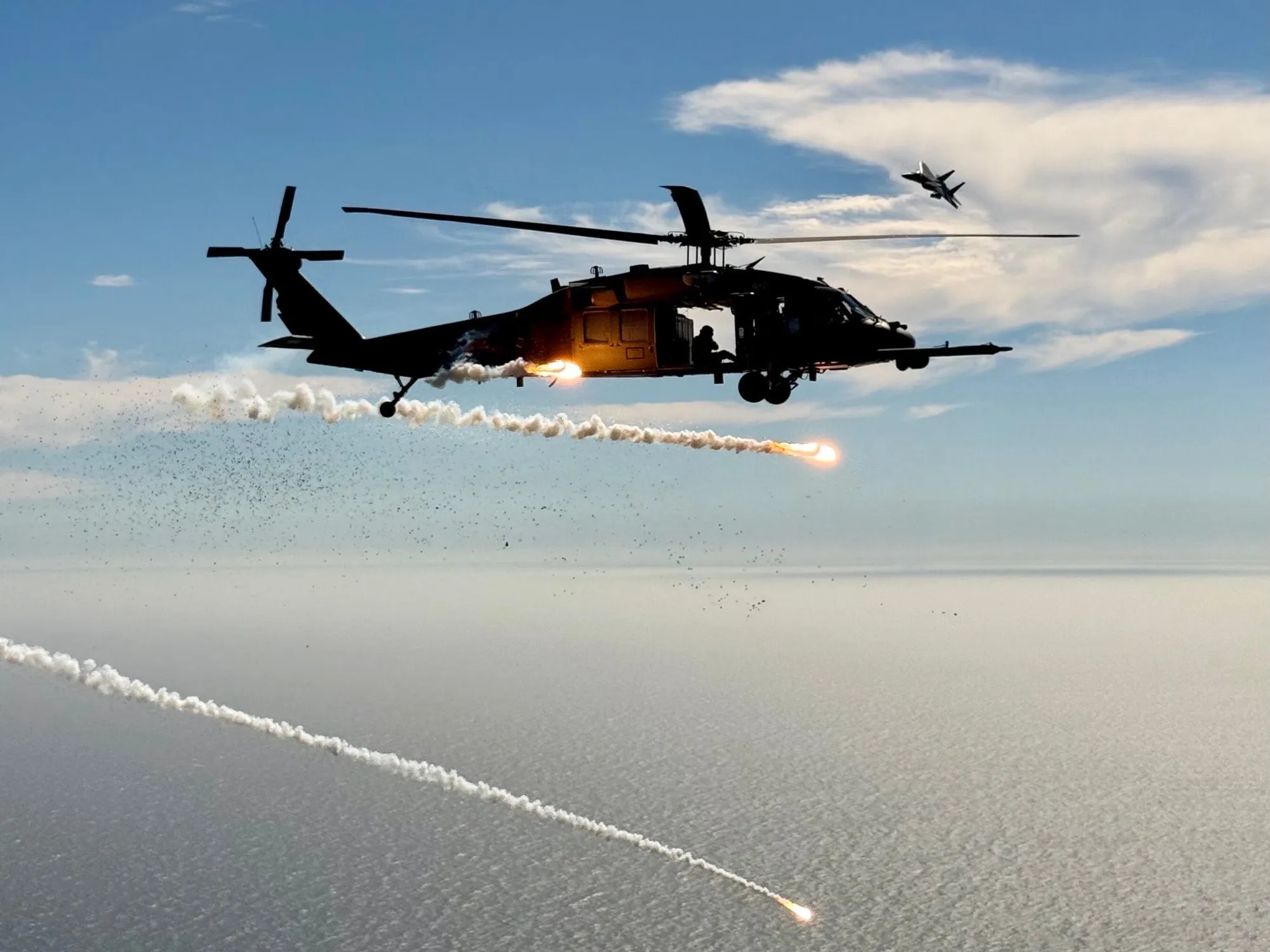
- Flare dispensing. Cartridges such as the CCU-145/A and BBU-36/B provide the energy that releases flares from aircraft dispensers.
- Chaff dispensing. The BBU-48A/B supports chaff dispenser actuation.
- Towed decoy deployment. The CCU-136A/A supplies the energy that deploys a towed decoy.
- Stores ejection. The Mk 107 and Mk 17 serve aircraft stores-release systems, pushing carried equipment away from the aircraft.
How are impulse cartridges made?
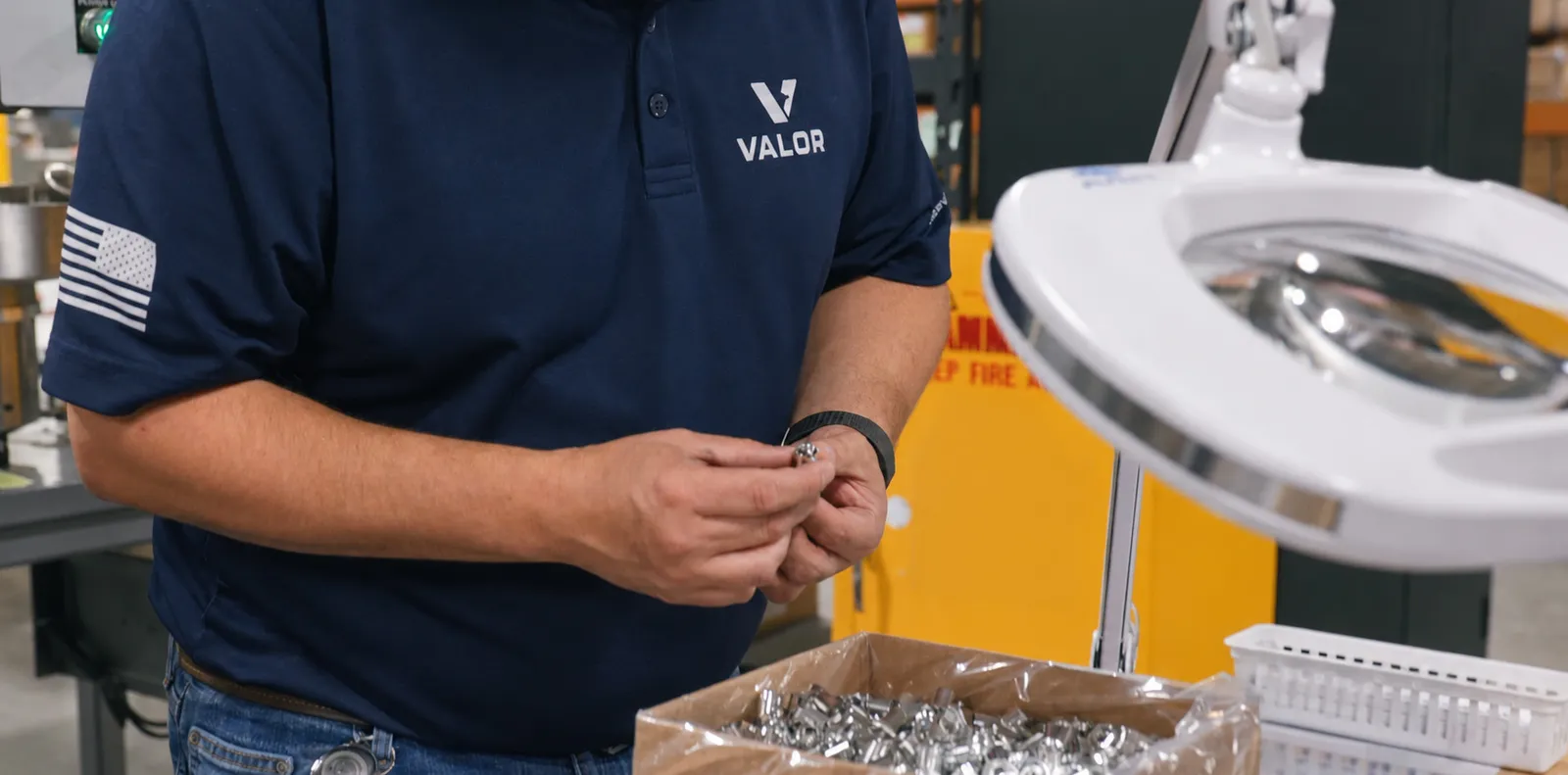
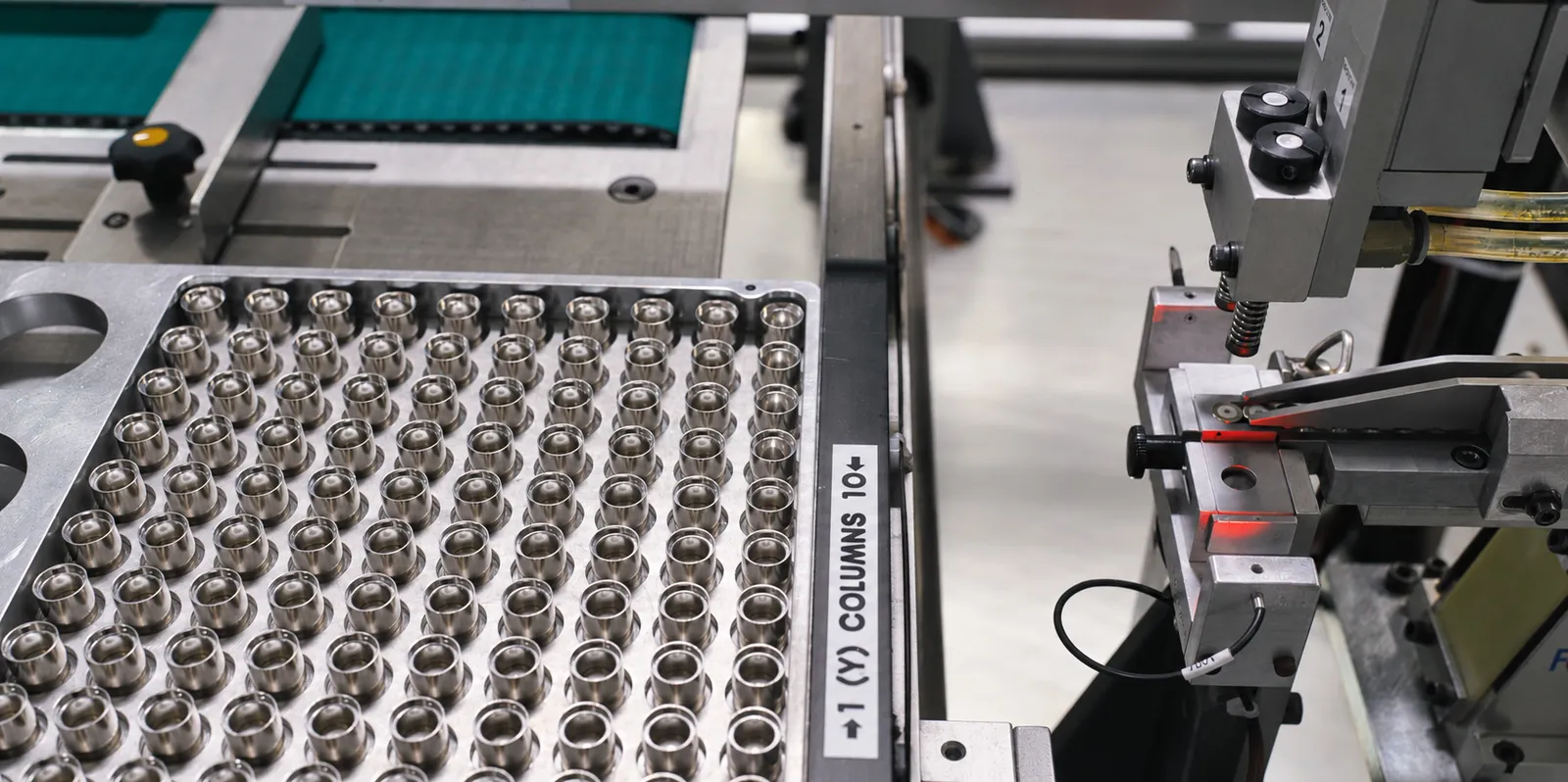
A typical impulse cartridge combines a machined body, an initiator, an energetic charge and a closure. Key manufacturing steps include precision machining of bodies and eyelets, bridgewire welding, energetic materials processing, weigh, load and press operations, and hermetic sealing.
Testing confirms each lot. Typical checks include electrical testing, hydrostatic and helium leak testing, and pressure bomb and velocity testing, with environmental qualification such as shock, vibration and climatic exposure where the program requires it.
What should buyers check in an impulse cartridge supplier?
- Credentials. ITAR registration, an ISO 9001 quality system and CMMC Level 2 for controlled program data.
- Process control. Whether loading, sealing and testing happen under one roof or are spread across vendors.
- Traceability. Lot-level records that connect each cartridge to its materials, processes and test results.
- Track record. Experience producing the specific designation the program uses.
Impulse cartridges at Valor Tactical
Valor Tactical manufactures impulse cartridges in Grand Junction, Colorado, and is the exclusive U.S. Navy supplier of the CCU-136A/A and CCU-145/A. Valor is also a qualified source for the BBU-36/B, BBU-48A/B and Mk 17, and produces more than 3 million cartridges per year. See impulse cartridges for the full range.
Have a requirement?
Send us a message and our team will follow up. Valor Tactical is ITAR registered, ISO 9001 and ISO 14001 certified, and CMMC Level 2.
Contact us